

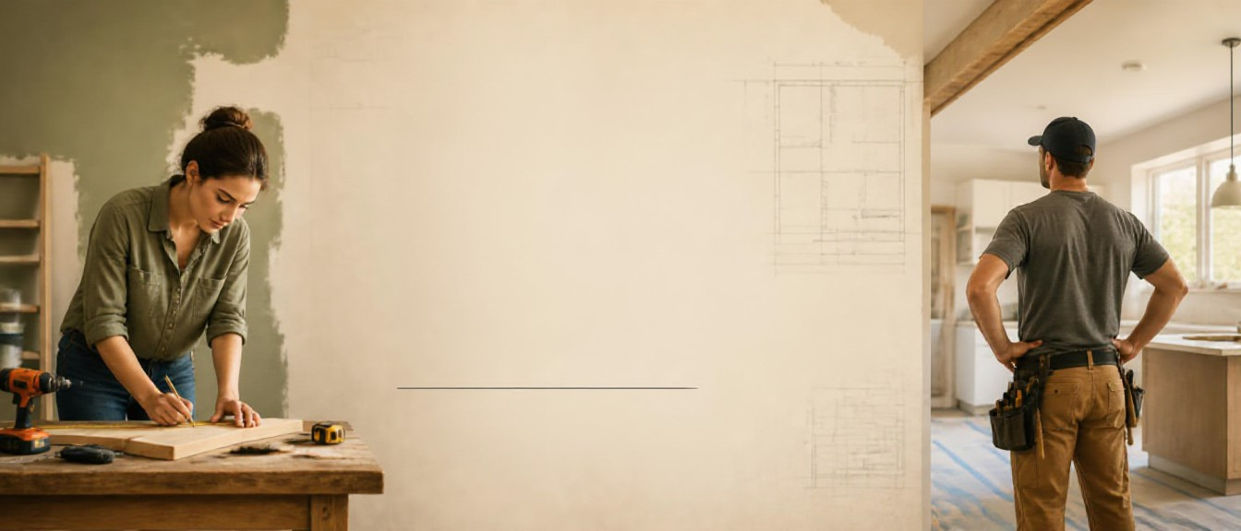
You can absolutely save money with DIY renovation projects—but the wrong “simple” upgrade can turn into permits, rework, and expensive renovation mistakes.
If you’re planning house renovations and wondering what’s safe to DIY versus what needs professional contractors, this Home Imagined guide breaks it down in plain language so you can make smarter decisions before you buy materials or open a wall.
DIY Renovation Projects That Are Usually Safe (and High Impact)
In general, DIY house renovations are best when the work is cosmetic, easy to undo, and doesn’t involve plumbing, electrical work, or structural changes.
Here are DIY renovation projects that are typically homeowner-friendly:
Painting walls, trim, and doors — Big visual change, low cost. Focus on prep: patch, sand, clean, tape, and prime where needed.
Updating hardware — Cabinet pulls, knobs, door handles, and hinges modernize a space Use a simple template to keep holes aligned.
Simple cosmetic refreshes — Caulking touch-ups, small drywall patches, weatherstripping, and updating light shades (not wiring).
Basic shelving and storage — Closet kits, wall hooks, and pre-made shelving when you can flnd studs and follow weight ratings.
Swap “decor” flxtures that don’t touch systems — Mirrors, towel bars, curtain rods, and other add-ons that don’t require moving plumbing or electrical connections.
Home Imagined rule of thumb — If you can reverse the work without opening walls or changing home systems, it’s usually a solid DIY candidate.
House Renovations That Should Be Done by Professional Contractors
Some work looks doable online but becomes risky the moment you hit hidden wiring, old pipes, or uneven framing. When safety, code, or long-term performance is on the line, hiring professionals is often the cheaper choice.
Consider professional contractors (and the right permits) for these common renovation categories:
Electrical work — New circuits, panel upgrades, rewiring, moving outlets/switches, adding recessed lighting, or troubleshooting repeated breaker Electrical mistakes can lead to shock, flre, and failed inspections.
Plumbing changes — Moving supply or drain lines, installing shower valves, changing venting, or flxing recurring leaks. Water damage can spread quietly behind walls and floors.
Structural changes — Removing or altering walls, cutting new openings, modifying beams/joists, or anything that changes load-bearing This may require an engineer and permits.
Waterprooflng (showers, tubs, basements) — Waterproof membranes, slopes, and drain details are A shower can look perfect and still fail if waterprooflng is wrong.
Rooflng and exterior envelope work — Rooflng, flashing, siding details, and many window/door Small errors can cause major leaks, mold, and rot.
Gas lines and fuel-burning appliances — Always use qualifled pros due to explosion and carbon monoxide risk.
Any project that requires permits — If the city/county wants an inspection, that’s a strong signal to hire a licensed pro (or at minimum, schedule a professional consultation flrst).
Safety checkpoint — If a mistake could cause injury, flre, flooding, mold, or structural failure, it’s not a “learn as you go” DIY project.
How to Decide: A Simple DIY vs. Pro Checklist for House Renovations
Confldence is helpful, but it’s not a plan. Use this quick check to reduce renovation mistakes and choose the right approach for your home, budget, and timeline.
DIY or Hire a Pro?
Does the project involve electrical work beyond a like-for-like swap?
Does it involve plumbing (moving lines, valves, drains, or venting)?
Could it require permits or inspections in your area?
Could a mistake stay hidden (leaks behind walls, loose wiring, poor waterprooflng)?
Is there a major safety risk (heights, heavy loads, rotating tools, water near wiring)?
If you checked any box, consider hiring professionals for the core work and DIYing the flnishes (painting, hardware, trim, and decor) to keep costs down while protecting your home.
Conclusion: Smarter Renovations Start with the Right DIY-Pro Split
DIY house renovations shine when you stick to low-risk, high-impact updates like paint, hardware, basic storage, and simple cosmetic refreshes. For plumbing, electrical work, structural changes, and anything involving permits, professional contractors help you avoid safety issues, failed inspections, and expensive renovation mistakes.
Home Imagined is here to help you plan with clarity. Call to action: Before you start your
next renovation, run it through the checklist above—then choose a DIY, pro, or hybrid plan that keeps your home safe and your results solid.


