

If you’re choosing between LVP vs. glue-down LVT for a kitchen project, the fastest answer is this: LVP is usually the better all-around choice for most homeowners, while glue-down LVT is the better fit when you want a lower-profile, tightly bonded floor for a busy kitchen.
Both are durable waterproof vinyl flooring options, but they solve slightly different problems. LVP flooring for kitchens is typically easier to install, more forgiving for DIY projects, and a little softer underfoot. Glue-down LVT installation takes more prep, but it can deliver a flatter, more permanent feel that works well in high-use or moisture-prone spaces.
In this guide, you’ll compare performance, comfort, maintenance, cost, and subfloor considerations so you can choose the right kitchen flooring with confidence.
LVP vs. Glue-Down LVT: Quick Comparison for Kitchen Flooring
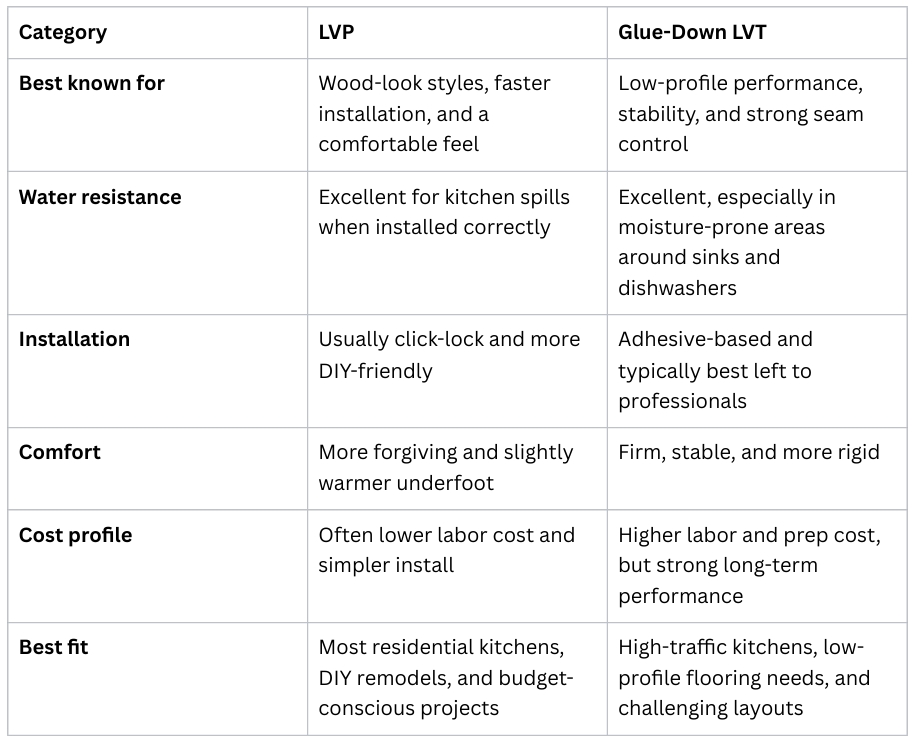
The table gives the short version, but the real choice depends on how your kitchen gets used and what kind of subfloor you’re working with.
Durability and Water Resistance in a Real Kitchen
Kitchen flooring has to handle more than the occasional spill. Water around sinks, dishwasher leaks, dropped utensils, chair movement, pet traffic, and constant cleanup can all wear a floor down faster than people expect.
LVP is a strong option for durable kitchen flooring because many products use a rigid core and a thick wear layer. That helps resist scratches, dents, and everyday impact while still giving you the look of hardwood without the maintenance headaches of real wood.
Glue-down LVT performs well too, especially when water protection and floor stability matter most. Because the material is bonded directly to the subfloor, it tends to stay planted in place and can feel especially secure in areas that see a lot of movement or repeated moisture exposure.
In practice, the product matters, but the installation matters just as much. Even the best waterproof vinyl flooring can fail early if the subfloor is uneven, damp, or poorly prepped.
Glue-Down LVT Installation vs. LVP Flooring for Kitchens
If you want a faster project, LVP flooring for kitchens usually wins. Click-lock planks are popular because they can speed up installation and reduce labor costs, which is a major plus in a kitchen project.
Glue-down LVT installation is more technical. The subfloor has to be flat, clean, and ready for adhesive. That means more prep time, more precision, and usually a professional installer. The payoff is a floor that feels solid, stays low to the ground, and works well in spaces where you want a more permanent finish.
For DIY vs professional installation, the rule is simple: LVP is the friendlier choice for confident DIYers, while glue-down LVT is usually the better choice for homeowners who want a cleaner, more controlled result from a pro.
Tip: If your kitchen has transitions, tight corners, or an awkward layout, glue-down LVT can handle the space well — but only if the prep is done correctly.
Comfort, Maintenance, Cost, and Subfloor Considerations
Comfort is one of the biggest differences in the LVP vs. glue-down LVT for a kitchen flooring decision. LVP usually feels a bit softer and more forgiving because of its floating construction and layered build. Glue-down LVT is firmer and more stable, which some homeowners prefer in larger kitchens or open-concept homes where they want a more anchored feel.
Maintenance is straightforward for both. Sweep often, clean up spills quickly, and mop with a manufacturer-approved cleaner. For busy families, the low-maintenance appeal is one reason vinyl flooring keeps ranking so well in kitchen flooring searches. That said, LVP tends to be the easier option for homeowners who want simple everyday upkeep with less installation complexity.
Cost is another major factor. LVP often comes out ahead on total project price because it can reduce labor time and usually requires less prep. Glue-down LVT may cost more upfront because of adhesive, labor, and subfloor work, but that extra investment can make sense if you want a more durable long-term fit or a low-profile flooring option that stays flat and secure.
Subfloor considerations can decide the project before style or color even comes into play. A floating LVP system can tolerate minor imperfections better than glue-down flooring, while glue-down LVT typically needs a flatter, more carefully prepared surface. If your subfloor has dips, moisture issues, or old adhesive residue, the right product may depend on how much prep work you’re willing to do.
Bottom line: the more challenging the subfloor, the more important it is to choose a flooring system that matches the conditions instead of forcing the wrong product to work.
When LVP is the Better Choice — and When Glue-Down LVT Wins
Choose LVP if you want a kitchen floor that is easier to install, more DIY-friendly, and usually more budget-conscious overall. It is often the best choice for homeowners who want durable kitchen flooring with a softer feel, fast installation, and strong performance in a standard residential project.
Choose glue-down LVT if you want a more permanent, low-profile flooring option that feels secure in high-traffic kitchens. It is often the smarter pick when moisture around sinks and dishwashers is a concern, when the layout is complex, or when you want the finished floor to feel especially stable underfoot.
If you are still undecided, the simplest rule is this: LVP is the better all-around choice for most homes, while glue-down LVT is the better specialized choice for kitchens that need a tighter, more fixed installation.
FAQ: LVP vs. Glue-Down LVT for Kitchen Flooring
Is LVP or glue-down LVT better for a kitchen?
LVP is better for most kitchen projects because it is easier to install, more comfortable, and usually more budget-friendly. Glue-down LVT is the better choice when you want a low-profile floor that feels especially stable in a busy kitchen.
Is LVP waterproof enough for kitchens?
Yes, LVP is waterproof enough for kitchens when it is installed correctly. It handles everyday spills well, which is why it is a popular choice for kitchen flooring.
Can you install LVP yourself in a kitchen?
Yes, LVP is one of the easiest kitchen flooring options to install yourself. Many products use a click-lock system, so DIY installation is often realistic for homeowners with basic skills.
Is glue-down LVT better around sinks and dishwashers?
Yes, glue-down LVT can be a better choice around sinks and dishwashers because it bonds directly to the subfloor. That creates a flatter, more secure surface in moisture-prone areas.
Which is more comfortable underfoot, LVP or glue-down LVT?
LVP is usually more comfortable underfoot because it feels a little softer and warmer. Glue-down LVT feels firmer and more rigid, which some homeowners prefer in high-use kitchens.
Which is cheaper: LVP or glue-down LVT?
LVP is usually cheaper overall because installation is faster and labor costs are lower. Glue-down LVT often costs more upfront, but it can be worth it for kitchens that need a more permanent finish.
Final Verdict
If you want the short answer, LVP is the best choice for most kitchen projects. It is easier to install, comfortable to live with, and strong enough to handle everyday kitchen use.
Glue-down LVT is the better option when your priority is stability, a low-profile finish, or a more controlled installation over a tricky subfloor. Both are smart waterproof vinyl flooring choices, but they are not interchangeable.
The best move is to match the floor to your kitchen, your budget, and your installation plan — then compare samples in your own lighting before you buy.


