

Choosing the right flooring can feel overwhelming, especially when you are comparing LVP vs tile vs hardwood for different spaces in your home. The best flooring for your home depends on how each room works, what kind of maintenance you want, and which flooring options fit your style and budget.
In this flooring guide, we break down the most important differences so you can make a confident choice. Whether you care most about durability, moisture resistance, or curb appeal, this article will help you narrow down the best fit for every room.
Understanding Your Options
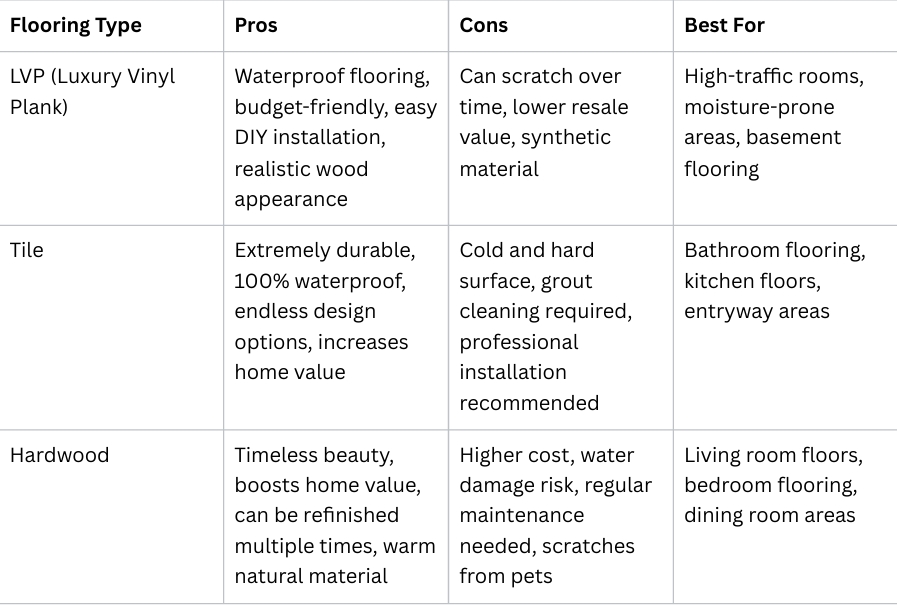
Before diving into room-specific recommendations, let's compare the three most popular flooring options to understand their strengths and limitations.
Room-by-Room Breakdown
Kitchen: Tile or LVP are usually the smartest choices because both handle spills, splashes, and frequent cleaning well. Tile offers maximum water resistance and durability, while LVP gives you a softer feel underfoot and a warmer look with less upkeep.
Bathroom: Tile is the classic option because it stands up to moisture and cleans easily, but LVP can also work well if you want a more budget-friendly surface. Hardwood is best avoided here since humidity and standing water can cause damage over time.
Living room: Hardwood brings elegance and a timeless finish that makes the space feel warm and inviting. If you want something more durable and easier to maintain for pets or kids, LVP can mimic the look of wood while handling daily wear more comfortably.
Bedroom: Hardwood is a favorite here because it feels warm, natural, and comfortable in a space designed for rest. It also gives bedrooms a polished look that pairs well with rugs and soft furnishings.
Basement: LVP is often the best solution because basements can have moisture concerns that make hardwood risky. It provides the look of wood without the same vulnerability to damp conditions or minor flooding.
Entryway: Tile is ideal for entryways because it can handle heavy foot traffic, mud, and wet shoes without wearing down quickly. Its durability and easy cleanup make it a practical first line of defense for the rest of your home.
Key Factors to Consider
Budget: LVP is typically the most affordable option, while hardwood usually costs the most. Be sure to factor in both material and installation costs when comparing choices.
Moisture levels: Rooms with more humidity or frequent spills need flooring that can handle water well. Tile and LVP are better suited to these spaces than hardwood.
Foot traffic: High-use areas need durable flooring that can stand up to daily wear. Tile and LVP are strong performers, especially in busy households.
Maintenance: Some floors require more care than others, so think about how much upkeep you are willing to do. Hardwood needs regular attention, while LVP and tile are generally easier to maintain.
Aesthetic preferences: Your flooring should support the overall style of your home. Hardwood feels classic and warm, tile can be sleek and versatile, and LVP offers a wide range of convincing wood looks.
Resale value: Flooring can influence how buyers view your home. Hardwood often has the strongest resale appeal, while tile and LVP can still be excellent choices in the right rooms.
Installation complexity: Some materials are easier to install than others. LVP is often more DIY-friendly, while tile and hardwood may require professional installation for the best results
Choosing the right flooring comes down to the needs of each room, your lifestyle, and your budget. By thinking about durability, moisture, maintenance, and design, you can find a material that works beautifully in everyday life.
The best flooring choice is one that balances long-term value with the way you actually live. With the right approach, you can choose a floor you will love for years to come.
How to Choose the Right Flooring for Every Room in Your Home
Choosing flooring sounds simple until you realize one material will have to handle spills, footsteps, sunlight, pets, humidity, and your style preferences all at once. The right choice can make your home feel warmer, quieter, and easier to live in; the wrong one can become a daily frustration.
This guide breaks down the three most popular options—luxury vinyl plank, tile, and hardwood—so you can match each room with the flooring that actually fits how you live. We’ll look at the strengths of each material, then walk room by room through the best choices for kitchens, bathrooms, bedrooms, basements, and more.
What LVP, Tile, and Hardwood Do Best
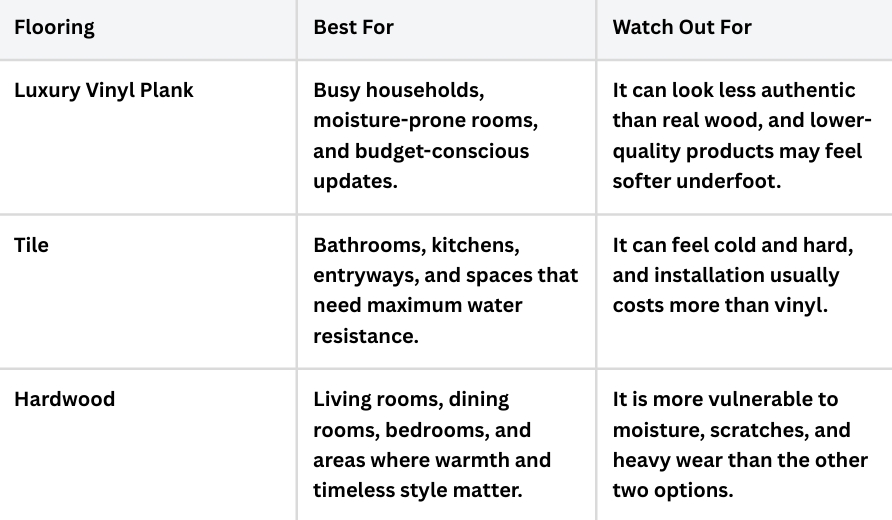
Key takeaway — The best flooring is not the most popular one; it is the one that fits the room’s demands and your day-to-day routine.
How to Match Flooring to Each Room
Kitchen: Kitchens need durability, easy cleanup, and strong moisture resistance. LVP or tile are usually the smartest choices because they can handle spills, dropped dishes, and constant traffic without much stress.
Bathroom: Bathrooms are the toughest moisture environments in the house, which makes water resistance the top priority. Tile or LVP are the best options here, and hardwood should be avoided because humidity and water can cause damage over time.
Living room: This is where many homeowners want a polished, welcoming look. Hardwood is often the best fit for a traditional, elegant feel, though high-quality LVP can be a practical alternative if you want easier maintenance.
Bedroom: Bedrooms benefit from comfort, warmth, and a calm atmosphere. Hardwood works beautifully here, especially when paired with rugs, because it creates a classic foundation that feels inviting without being fussy.
Basement: Basements usually come with moisture concerns, even when they seem dry. LVP is typically the best choice because it handles humidity better than wood and gives you a finished look without the risk that hardwood brings underground.
Entryway: Entryways take constant abuse from shoes, dirt, rain, and temperature swings. Tile is often the most durable option because it stands up to messes and makes cleanup fast when life gets hectic.
Making the Final Decision
The easiest way to narrow your choices is to start with how each room actually works. Visit showrooms and see samples in person, because color, texture, and sheen can look very different under real light than they do on a screen.
Think about the whole floor plan too, since continuity from room to room can make a home feel larger and more cohesive.
If your household may change, plan for long-term lifestyle needs such as pets, kids, or aging in place so you are not replacing floors sooner than expected.
Get multiple quotes from installers so you understand the full cost, not just the material price.
Read warranties and reviews carefully so you know how the product performs after installation.
And once you have done the practical research, trust your instincts—the right floor should feel good in your home, not just look good on paper.
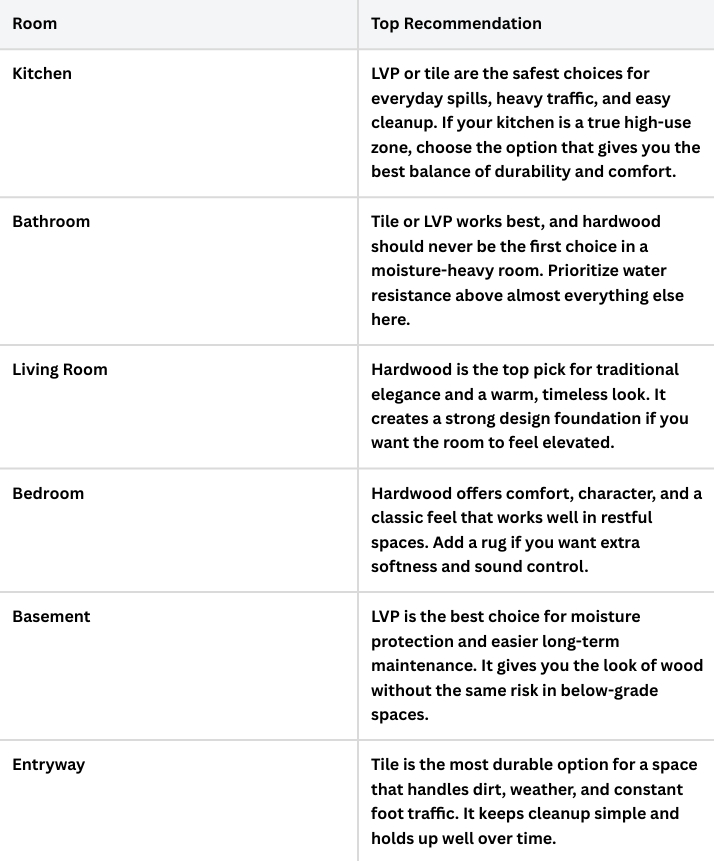
Quick Reference Guide
Conclusion
The best flooring choice depends on the room, the amount of moisture and wear it will face, and the kind of feel you want at home.
Take time to assess your specific needs, consult with flooring professionals, and compare your options with both budget and lifestyle in mind.
In the end, the right flooring is the one that supports how you live and still makes your space feel beautiful. Choose well, and you will create a home that is both functional and uplifting for years to come.
Frequently Asked Questions About Flooring
What is the most durable flooring option?
Tile is often the most durable flooring option because it stands up well to heavy traffic, moisture, and daily wear. LVP is another excellent choice for durable flooring, especially in busy rooms where you want waterproof flooring that is easier to install and maintain.
Is LVP better than hardwood?
LVP and hardwood each have strengths, so the better choice depends on your needs. LVP is usually more budget-friendly and offers better moisture resistance, while hardwood delivers a classic natural look that many homeowners still prefer for best flooring for resale appeal.
What flooring is best for resale value?
Hardwood generally adds the most resale value because buyers love its timeless style and long-term appeal. Tile can also boost value in kitchens, bathrooms, and entryways where durable flooring and strong moisture protection matter most.
Can you install LVP in bathrooms?
Yes, LVP is one of the best flooring for bathrooms because it is waterproof flooring and handles humidity well. It is a popular choice for flooring installation in bathrooms when you want a practical surface with a wood look.
How long does each flooring type last?
Tile can last 50 years or more with proper care, making it one of the longest-lasting flooring options. Hardwood often lasts 30 to 100 years with refinishing, while LVP typically lasts 10 to 25 years depending on product quality and traffic levels.
What is the easiest flooring to maintain?
LVP and tile are both low-maintenance choices that are easy to clean and care for over time. For homeowners who want the easiest flooring to maintain, these options are often the best flooring for everyday living, especially in high-use areas.


