

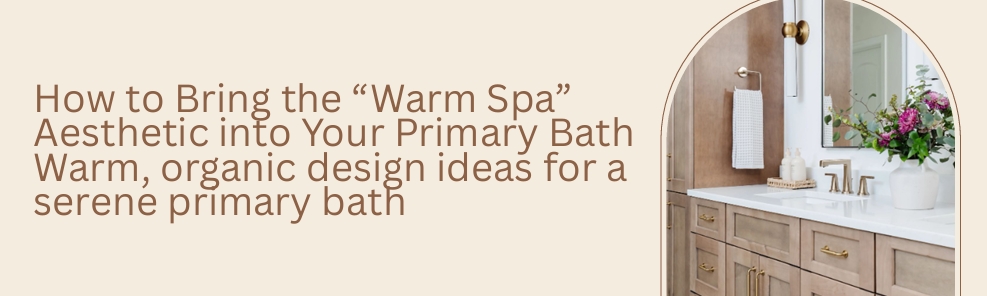
If your primary bath still leans on stark white tile and cool gray finishes, you’re not alone—but the mood has shifted. More homeowners are turning to a warm spa bathroom project to create a space that feels restorative, layered, and calm instead of crisp and clinical. In other words, the bathroom is becoming a retreat, not just a utility room.
That’s why this style has become such a defining design direction. It blends the ease of organic minimalism design with tactile materials, softer color palettes, and a quieter kind of luxury. The result is a warm neutral bathroom that feels deeply livable, soothing in every season, and far more personal than the all-gray looks of the past.
If you’re gathering luxury bathroom ideas for a primary bath renovation, this shift is worth paying attention to. The new goal isn’t just to make the space look updated—it’s to make it feel like a daily escape that still reflects your style.
Earthy Neutrals That Feel Softer Than Cool Gray
The easiest way to warm up a bath is to rethink the palette. Cool undertones can make a room feel flat or sterile, especially in spaces with a lot of hard surfaces. Warm undertones, by contrast, introduce depth and comfort. Instead of icy white and blue gray, look to cream, warm taupe, soft beige, alabaster white, terracotta, muted olive, warm ochre, and even rich charcoal for balance and contrast.
These shades work beautifully because they reflect light in a gentler way. A cream vanity against soft beige walls feels calm instead of stark. Warm taupe paired with alabaster white reads tailored and timeless. A touch of terracotta or muted olive can add just enough personality to keep the room from feeling too quiet.
Texture matters just as much as color. Finishes like Roman clay, lime wash, and soft matte tile add subtle movement that makes the room feel hand-finished and layered. In a warm neutral bathroom, those surfaces do more than decorate—they create atmosphere. They soften the room visually and make even simple materials feel elevated.
Natural Wood and Floating Vanities Ground the Space
Wood is one of the most effective ways to bring warmth into a primary bath without making it feel heavy. White oak is a favorite for a reason: it’s bright, naturally textured, and easy to pair with stone and tile. Walnut brings a deeper, richer tone that feels more tailored and dramatic. Both options support the quiet, collected feel that defines organic minimalism design.
Details matter here, too. Reed-front panels add rhythm and a handcrafted look without overpowering the room. Matte finishes keep the wood from looking glossy or overly polished, which helps the whole space feel softer and more spa-like.
Floating vanities are especially useful in a primary bath renovation because they do two things at once: they visually lighten the room and free up floor area. That space-saving appeal can make a bath feel larger, cleaner, and easier to maintain. If you want the room to feel airy but still grounded, a floating cabinetry design in white oak or walnut is a smart move.
Stone, Curves, and Fixtures That Calm the Eye
Once the palette and millwork are set, the next layer is surface and shape. Warm-veined quartz can bring in the look of natural stone without sacrificing consistency or ease of care. The veining should feel soft and organic, not overly dramatic, so it complements the rest of the room instead of competing with it.
Curves also play a big role in the warm spa look. Rounded mirrors soften the geometry of the room. Arched shower openings add an architectural detail that feels more inviting than a sharp edge. A freestanding soft-curve soaking tub becomes a focal point that signals relaxation the moment you walk in.
For fixtures, finishes like brushed bronze, champagne gold, or oil-rubbed matte black can all work beautifully, depending on the rest of the palette. The key is to choose hardware that feels understated and tactile rather than shiny or overly ornamental. In a space built around calm, every surface should support the mood.
Seamless Wet Rooms and Walk-In Showers Add Everyday Ease
If the warm spa look is about creating a retreat, then the layout should be just as soothing as the finishes. A curb less shower design makes the room feel more open and continuous, especially when paired with a seamless wet room concept. Without the visual break of a curb, the bath reads as one cohesive space, which reinforces that calm, hotel-like feeling homeowners love.
Walk-in showers also support better flow and a more generous sense of scale. They’re practical for busy mornings and equally appealing for slow, end-of-day routines. Pair that openness with layered lighting, and the room becomes even more inviting. Under-cabinet glow can gently lift the vanity area, while LED shower niche lighting adds a subtle, functional highlight without feeling harsh.
Warm lighting temperatures matter here, too. Cool light can flatten all the beautiful materials you’ve chosen. Softer illumination brings out the richness of wood, the depth of tile, and the quiet movement in stone, making the whole room feel more like a sanctuary.
The Emotional Payoff of a Warm Spa Bathroom
A successful warm spa bathroom makeover does more than update finishes. It changes how your primary bath feels to use every day. The right mix of earthy neutrals, natural wood, tactile stone, and warm lighting can make the room feel grounded, restorative, and unmistakably yours. That’s the real appeal of a modern warm neutral bathroom: it supports your routine while also giving you a place to slow down.
If you’re ready to turn inspiration into a plan, the best next step is to see the materials in person. Visit our bathroom showroom Carlisle PA homeowners trust to touch and compare white oak, luxury quartz, and textured tile samples side by side with a designer. Seeing those finishes together can make your luxury bathroom ideas feel concrete—and help you shape a primary bath that looks beautiful and feels even better to live in.


